
The Flat-Back Claw Clip: A New Perspective on Hair Styling

Some of fashion's most appealing innovations begin with a familiar object, reconsidered. The claw clip is one of them. Long associated with quick twists, relaxed updos, and the understated style of the 1990s, this practical accessory has returned with a renewed emphasis on shape, materials, and design.
Today's hair clips are no longer defined by one familiar silhouette. Sculptural curves, polished acetate, open-center construction, and flatter profiles have introduced new possibilities for styling hair without sacrificing the character of the accessory itself.
Among the more interesting developments is the flat-back claw clip. Designed with a less prominent exterior, it offers an alternative to the traditional rounded claw, bringing a cleaner silhouette to one of fashion's most useful accessories.
The result is a small but meaningful shift in design: a familiar fastening mechanism, reconsidered for the way we wear our hair and move through the day.
The Evolution of the Claw Clip
The claw clip became particularly recognizable in the late twentieth century, when practical hair accessories played an important role in the relaxed, minimal styling of the 1990s.
Its appeal was immediate. A single accessory could secure hair in a twist without requiring multiple pins or elaborate styling techniques.
Claw clips also offered an alternative to tight elastic ponytails, allowing hair to be gathered and held in different arrangements.
Yet the familiar claw design came with certain limitations. Many traditional clips have a pronounced curved back that extends outward from the head, creating a bulky profile.
As hair accessories evolved, designers began reconsidering these proportions, producing flatter shapes and new arrangements of teeth, hinges, and decorative surfaces.
Today's flat-back and open-center designs reflect this continued development.
What Is a Flat-Back Claw Clip?
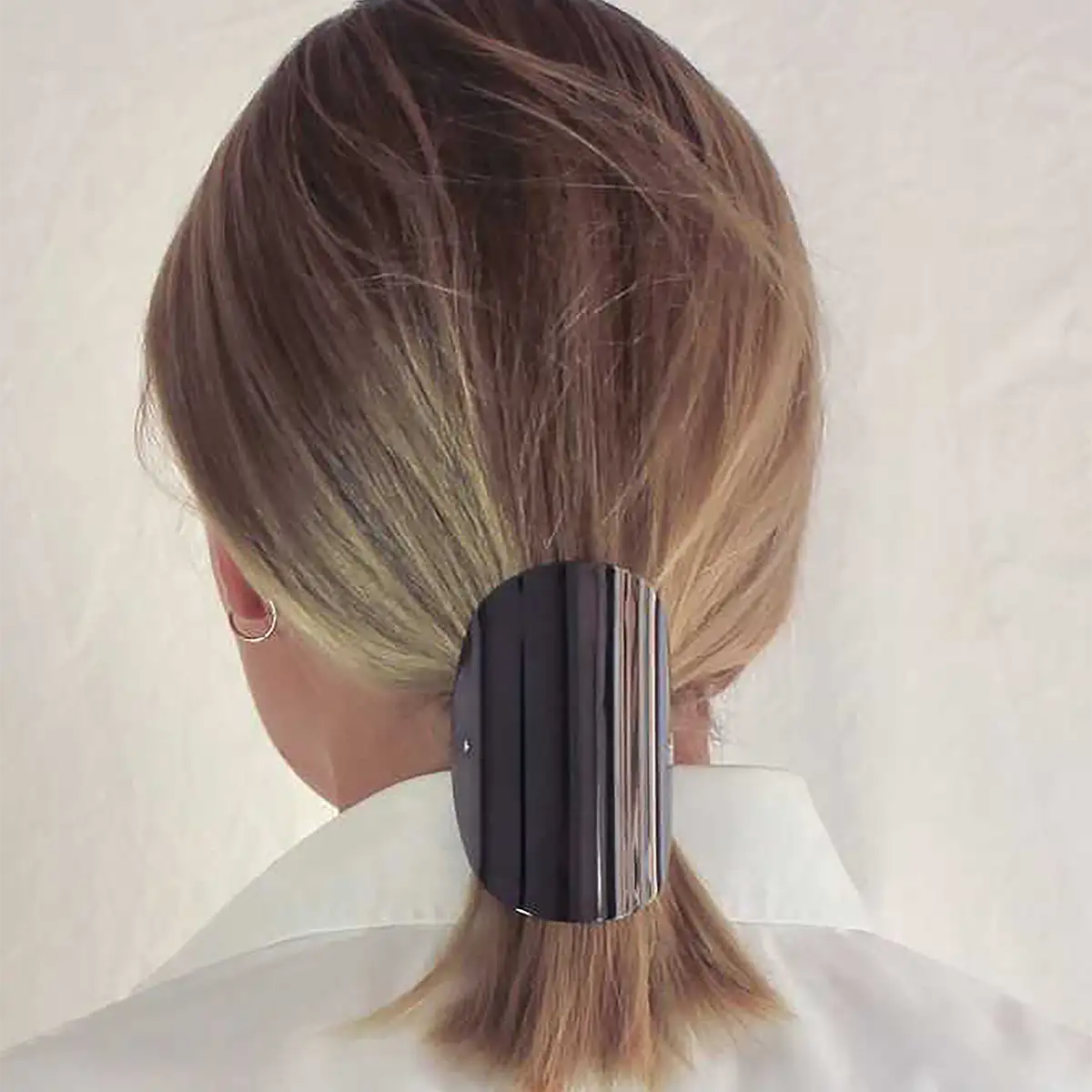
A flat-back claw clip is a variation of the traditional hair claw designed with a comparatively flat exterior surface.
Conventional claw clips often have rounded or arched bodies that project noticeably from the back of the head.
A flat-back design reduces that pronounced curve, creating a more streamlined appearance.
This difference can be especially noticeable in side-profile views, where the accessory follows a less prominent silhouette.
The flatter construction may also reduce the amount of protruding hardware that presses against a headrest when seated, although comfort varies according to the clip's position, dimensions, and the individual's hairstyle.
The central purpose remains the same: securing hair through a mechanical arrangement of opposing teeth and a spring-loaded hinge.
What changes is the geometry of the accessory and how it interacts with the head.
Flat-Back vs. Traditional Claw Clips: Understanding the Difference
Although both designs perform a similar function, their shapes can produce different styling experiences.
Traditional Claw Clips
The conventional claw clip usually features two curved halves connected by a spring hinge.
Its rounded construction can provide substantial internal space for gathering and holding hair.
Depending on the size, these clips may accommodate full twists, folded ponytails, and larger sections of hair.
However, the curved exterior can create a prominent shape at the back of the head.
Flat-Back Claw Clips
Flat-back designs emphasize a more level outer surface, reducing the pronounced arch associated with many traditional claws.
This can produce a cleaner profile and may make the accessory less intrusive against some chair backs or headrests.
Internal capacity and holding strength still depend on the individual clip's size, tooth design, spring tension, and construction.
A flatter shape does not automatically mean the clip will hold more hair or provide a stronger grip.
What Is an Open-Center Claw Clip?
An open-center claw clip incorporates visible openings within its structure rather than relying on a completely solid outer body.
These openings introduce a sense of visual lightness, allowing sections of hair to remain visible through the design.
The result can resemble a small architectural framework, with the material forming curved or geometric lines around the hairstyle.
Open-center construction is primarily a design characteristic. Its influence on grip, flexibility, or weight depends on the exact dimensions and materials used.
When combined with a flat-back silhouette, the open-center design offers an attractive alternative to the conventional solid claw clip.
The Beauty of Polished Italian Acetate
Material selection plays an important role in the appearance of premium hair accessories.
Italian acetate is particularly appealing for its rich colors, layered patterns, and polished surfaces.
Derived from processed cellulose, cellulose acetate is widely used in eyewear, hair accessories, and fashion objects.
It can be manufactured in sheets containing multiple colors and decorative effects, creating depth that differs from simple surface printing.
Tortoiseshell patterns, translucent finishes, and marbled effects are among the many possibilities.
When shaped and polished, acetate can produce smooth curves and a reflective surface that enhances the accessory's form.
Italian acetate describes the origin of the material, rather than necessarily the country where the finished accessory is assembled.
For hair clips, the material offers an appealing balance of decorative possibilities and design versatility.
A Closer Look: The Open-Center Flat-Back Claw Clip
The Open-Center Flat-Back Claw Clip | Polished Italian Acetate, available at L'Atelier Global, brings together two significant design elements: an open-center structure and a flatter exterior silhouette.
The polished acetate creates a decorative framework around the gathered hair, while the open construction allows the hairstyle itself to remain part of the visual composition.
Its flatter profile offers a departure from traditional rounded claws, making it particularly appealing for those who prefer a less bulky accessory.
Available in several neutral and patterned finishes, the design moves easily between relaxed styling and more polished arrangements.
Rather than hiding the functional nature of the clip, its construction becomes part of its visual appeal.
Choosing the Right Color for Your Hair
Hair accessories can blend with natural hair color or create contrast, depending on the effect you prefer.
A dark clip worn against brunette or black hair can produce a restrained, nearly monochromatic appearance.
Lighter patterned finishes create more definition against dark hair, emphasizing the shape of the accessory.
On blonde or lighter brown hair, chocolate and black finishes can create a stronger contrast, while pale patterns may produce a softer effect.
The Open-Center Flat-Back Claw Clip is available in five finishes: Chocolate, Onyx, Ivory Tokyo, Black, and Yellow Tokyo.
Each provides a different relationship between color, pattern, and hair tone.
Ultimately, color selection is a matter of personal style rather than a rule dictated by hair color.
Are Flat-Back Claw Clips More Comfortable?
Comfort is one of the reasons flat-back hair clips attract attention.
Traditional claws can create a noticeable pressure point when the back of the head rests against a chair.
By reducing the projection of the clip's exterior, some flat-back designs may feel less intrusive in seated positions.
However, the amount of pressure also depends on where the clip is placed, its size, the amount of hair gathered, and the shape of the headrest.
Even a flat-back clip contains rigid components, including teeth and a hinge, so it should not be assumed comfortable for every position.
Hair clips should generally be removed before sleeping, particularly when they contain rigid or projecting hardware.
The strongest advantage of a flatter design is the additional choice it offers in silhouette and fit.
How to Style an Open-Center Flat-Back Claw Clip
One of the most appealing characteristics of an open-center clip is the way hair remains visible through its structure.
This makes it particularly effective for styles that emphasize texture, twists, or the natural movement of hair.
The Relaxed French Twist
Gather the hair at the nape of the neck and twist it upward.
Position the clip over the twist so that its teeth engage the hair securely.
Depending on the length of the hair and capacity of the clip, the ends may be tucked inside or left visible.
Allowing a few strands to remain loose can create a softer silhouette.
The Half-Up Style
Separate the upper portion of the hair and draw it toward the back of the head.
Secure the section with the clip, leaving the remaining hair loose.
The open-center construction allows the gathered section to remain visible, adding texture to the hairstyle.
This is particularly useful when the full volume of the hair would require a larger clip.
The Low Twist
Gather the hair at the base of the head and twist it into a compact arrangement.
Fasten the clip over the twist, checking that the teeth securely engage enough hair to prevent slipping.
This creates a restrained look that works well with tailored clothing, knitwear, and simple dresses.
Choosing a Hair Clip for Fine, Thick, or Long Hair
No single claw clip design is ideal for every hair type.
Fine hair may benefit from tooth placement and spring tension that provide an effective grip without excessive pressure.
Thick hair requires sufficient internal capacity to accommodate the gathered strands.
Long hair may need to be folded or twisted before fastening, depending on its density and the clip's dimensions.
Curly hair introduces additional considerations because volume and texture can affect how the teeth engage with the hairstyle.
The most useful measurement is not simply hair length but the actual volume of hair being secured.
A clip that fits a half-up style may not accommodate a full French twist.
A secure fit should not require forcing the clip closed or pulling the hair tightly against the scalp.
Why the Details of Hair Clip Construction Matter
The mechanical components of a claw clip are just as important as its decorative finish.
The hinge connects the two halves and allows the clip to open and close.
The spring provides closing force, while the teeth hold the gathered hair.
The arrangement of these elements affects the clip's capacity, opening resistance, and grip.
Smoothly finished edges can also help reduce unwanted catching or snagging.
A well-considered design integrates these functional requirements with the overall shape of the accessory.
For an open-center flat-back clip, the geometry of the body becomes particularly important because it defines both the visible silhouette and the position of the fastening components.
How to Care for Polished Acetate Hair Clips
Polished acetate benefits from gentle cleaning and careful handling.
After wearing, use a soft cloth to remove surface residue and fingerprints.
For ordinary cleaning, a slightly damp cloth may be used, followed by thorough drying.
Avoid exposing acetate accessories to excessive heat, prolonged direct sunlight, or harsh chemical products.
Perfume, hairspray, acetone, and strong cleaning agents can affect certain decorative finishes.
Store clips separately from sharp metal accessories to reduce the possibility of scratches.
When opening and closing a clip, use the intended handles rather than pulling the teeth apart.
These simple precautions can help maintain the polished appearance and function of the accessory.
The Appeal of a More Considered Hair Accessory
A hair clip may be a small object, but the decisions behind its design can make a noticeable difference.
The material determines its surface character. The shape influences its silhouette. The hinge and teeth affect its practical performance.
In an open-center flat-back design, these elements come together in an accessory that places equal emphasis on appearance and function.
Its sculptural shape offers a different interpretation of the traditional claw clip, while polished Italian acetate adds color, texture, and visual depth.
For those who appreciate accessories with strong design and practical purpose, it is a compelling addition to a personal hair accessory collection.
View the Open-Center Flat-Back Claw Clip | Polished Italian Acetate
Style Without Borders™

